
Medical technology sourcing for hospitals is the strategic procurement process of identifying, evaluating, and acquiring advanced clinical equipment, digital health systems, and biomedical devices from global vendors. This discipline aligns clinical efficacy, regulatory compliance, and total cost of ownership (TCO) to optimize healthcare delivery. Modern healthcare facilities rely on structured international procurement pipelines to integrate cutting-edge innovations while maintaining budgetary sustainability.
Key Takeaways
- Strategic procurement reduces TCO by up to 22% compared to reactive, ad-hoc equipment purchasing models.
- Regulatory verification is mandatory, requiring alignment with FDA 510(k), PMA, or CE mark standards prior to contract execution.
- Interoperability drives clinical value, demanding native adherence to HL7 and FHIR data integration protocols.
- Cross-border procurement networks mitigate regional supply shortages and grant early access to specialized diagnostic systems.
- Post-implementation lifecycle planning protects capital investments through vendor performance metrics and preventive maintenance agreements.
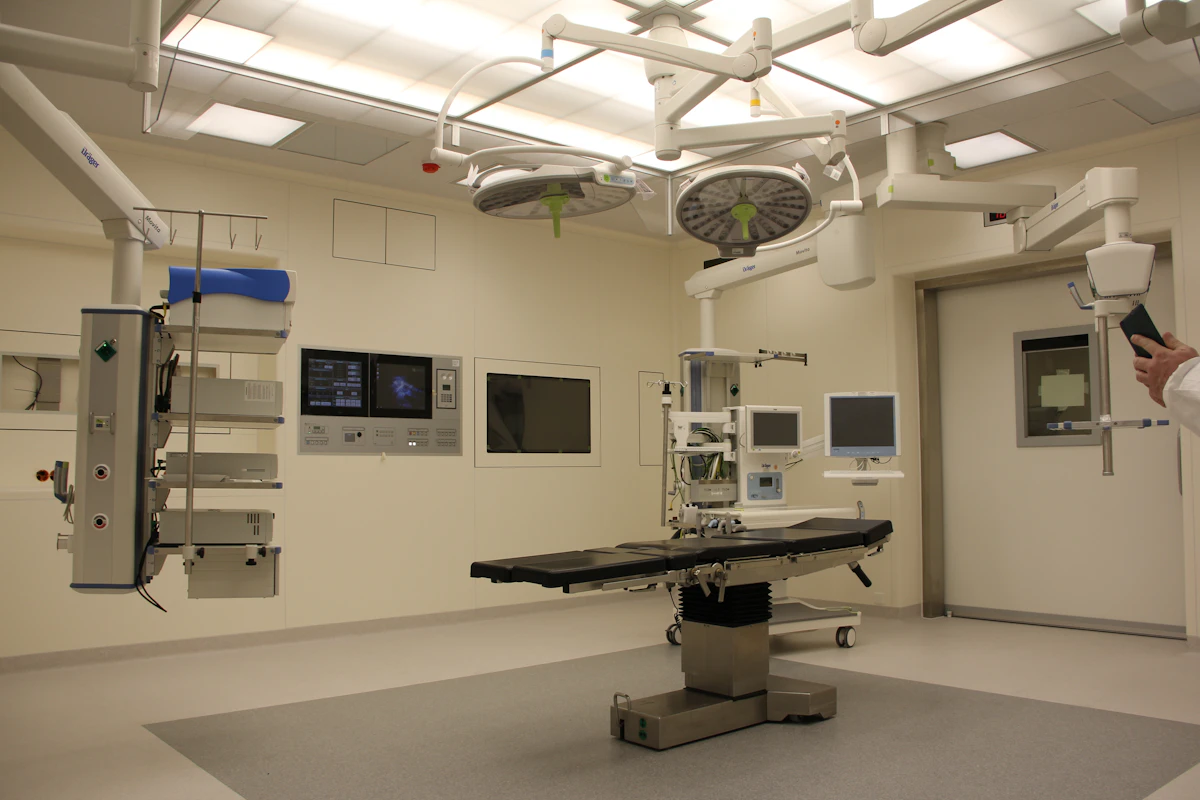
What Is Medical Technology Sourcing for Hospitals?
Medical technology sourcing is the systemic approach hospitals use to acquire medical devices, software infrastructure, and clinical hardware. It replaces transactional buying with data-driven evaluation of clinical efficacy, vendor reliability, and long-term operating costs.
Hospital procurement committees use this methodology to manage complex acquisitions, including:
- Diagnostic imaging platforms: Magnetic resonance imaging (MRI), computed tomography (CT), and robotic fluoroscopy suites.
- Invasive surgical robotics: Minimally invasive surgical consoles, automated navigation systems, and laparoscopic instrumentation.
- Point-of-care digital infrastructure: Wireless physiological telemetry, electronic health record (EHR) workstations, and smart infusion pumps.
- Laboratory automation suites: High-throughput clinical chemistry analyzers and automated molecular pathology platforms.
Deploying custom medical solutions for healthcare providers allows health systems to tailor equipment configurations directly to their patient demographic needs rather than purchasing off-the-shelf bundles.
Why Is Strategic MedTech Sourcing Critical for Healthcare Systems?
Strategic sourcing protects hospital operating margins while accelerating patient care standard improvements. Healthcare systems operate under tight cash-flow parameters, making capital misallocation in diagnostic equipment a severe operational risk.
Direct acquisition costs represent merely 35% to 45% of a medical device's lifetime expenditure; recurring software licensing, specialized calibration, and maintenance contracts account for the remainder.
Integrating clinical technology through structured channels yields distinct organizational advantages:
- Capital expenditure optimization: Aggregated purchasing power and multi-facility contracts lower capital entry points.
- Clinical outcome standardization: Consistent equipment fleets across hospital wards reduce operator error and training latency.
- Supply chain resilience: Multi-region sourcing models insulate health systems from component and semiconductor shortages documented by the U.S. Food and Drug Administration (FDA).
- Technological obsolescence mitigation: Modular acquisition contracts permit rolling hardware and software upgrades without complete capital replacements.
How to Execute a Medical Technology Sourcing Framework?
Executing a resilient procurement cycle requires hospital administrators to transition from subjective clinician requests to a data-backed qualification pipeline.
Needs Assessment ➔ Regulatory Review ➔ TCO Modeling ➔ Vendor Audit ➔ SLA Integration
- Conduct clinical needs audits: Cross-reference physician requests against clinical volume forecasts and current asset utilization rates.
- Standardize functional requirements: Define exact technical thresholds, physical facility requirements, and cybersecurity compliance targets.
- Model the total cost of ownership: Calculate energy consumption, proprietary consumables, certified software patches, and technician certifications.
- Audit international vendor networks: Screen international manufacturers using international medical service provider B2B criteria to ensure operational reliability.
- Execute service-level agreements (SLAs): Establish legally binding response windows, guaranteed parts replacement lead times, and uptime guarantees.
What Are the Key Evaluation Criteria for Sourcing Medical Devices?
Hospitals must evaluate prospective medical technologies through four objective technical pillars to avoid post-purchase clinical disruptions.
Regulatory and Quality Compliance
Medical devices must possess valid regulatory clearance in the destination market, such as an FDA 510(k) clearance or European Union Medical Device Regulation (EU MDR 2017/745) certification. Facilities must verify that manufacturing plants adhere to the ISO 13485:2016 quality management framework.
Technical Interoperability and Cybersecurity
Modern devices must integrate directly with existing hospital information systems without requiring custom middleware. Ensure the hardware natively supports:
- HL7 and Fast Healthcare Interoperability Resources (FHIR): Standard data exchange formats between devices and EHR systems.
- DICOM protocols: The universal benchmark for transmitting and managing medical imaging datasets.
- NIST cybersecurity standards: Hardened firmware designed to withstand ransomware, unauthorized remote access, and zero-day vulnerabilities.
Clinical Workflow Impact
A device that causes workflow friction will suffer from low adoption rates. Sourcing teams must analyze user-interface ergonomics, pre-procedure calibration duration, and cleaning cycle complexity.
Comparing Sourcing Models: Group Purchasing Organizations vs. Direct Global Sourcing
Hospitals typically choose between traditional domestic Group Purchasing Organizations (GPOs) and Direct Global Sourcing models. The optimal choice depends on volume requirements, customization needs, and available capital.
| Sourcing Parameter | Group Purchasing Organization (GPO) | Direct Global Sourcing Network |
|---|---|---|
| Procurement Cycle | Fast (pre-negotiated catalog) | Moderate to Long (custom vetting) |
| Unit Cost Flexibility | Fixed tier-based pricing | Highly negotiable volume pricing |
| Customization Capability | Low (standardized commercial models) | High (tailored hardware/software specs) |
| Supply Chain Transparency | Medium (limited upstream visibility) | High (direct tier-1 manufacturer access) |
| Regulatory Burden | Handled primarily by the vendor | Managed jointly by hospital & partner |
| Best Suited For | Commodity supplies and standard beds | Advanced diagnostics, robotics, specialized surgical suites |
Health systems seeking specialized, non-standardized diagnostic ecosystems frequently leverage direct procurement via strategic healthcare partnerships worldwide to bypass catalog markups.
What Are the Supply Chain Challenges in Global MedTech Procurement?
Global sourcing exposes health networks to distinct cross-border friction points that do not exist within domestic distributor transactions. Identifying these hurdles early safeguards procurement schedules.
- Complex customs clearance protocols: High-end clinical diagnostic equipment often contains radiation-emitting components or specialized refrigerants subject to strict international trade controls.
- Cold-chain integrity risks: In-vitro diagnostic (IVD) reagents and sensitive optical sensors require continuous environmental monitoring throughout oceanic or air transit.
- Geopolitical tariff fluctuations: Sudden changes in import tariffs can quickly erase anticipated unit savings if contracts lack price-protection clauses.
- Regional voltage and infrastructure mismatches: Sourcing hardware designed for 50Hz electrical grids for use in 60Hz US clinical environments demands expensive transformer conversions.
How to Manage Medical Technology Vendor Contracts and Maintenance?
Long-term value creation depends entirely on post-acquisition contract governance. A low purchase price quickly transforms into a capital sinkhole if service-level agreements are poorly structured.
Hospitals must build the following protections into equipment contracts:
- Guaranteed uptime thresholds: Demand financial penalties or credit rebates if mission-critical diagnostic units drop below 98% operational uptime.
- Biomedical team training clauses: Mandate vendor-funded, certified training for in-house clinical engineering staff to handle Level-1 and Level-2 repairs.
- Open-architecture maintenance access: Avoid contracts that lock the hospital out of internal error logs, diagnostic software, or non-proprietary replacement parts.
- Guaranteed parts availability timelines: Require vendors to guarantee component manufacturing and availability for a minimum of 7 to 10 years post-purchase.
Health systems establishing multi-country service capabilities can consult b2b medical consultation services to audit service agreements against global performance benchmarks.
How Can Cross-Border Sourcing Support Global Medical Facilities?
Hospitals providing tertiary care to international patient populations face unique equipment demands. Specialized clinical centers frequently align procurement with regional referral pathways and travel medicine demands.
Facilities operating within this framework utilize global medical tourism b2b partners to benchmark technology adoption against global clinical standards. Procuring medical technology that matches international patient expectations—such as advanced photon-counting CT or intraoperative MRI suites—strengthens a hospital's reputation as a world-class destination for care.
Conclusion
Modern medical technology sourcing for hospitals requires a systematic transition from reactive purchasing to disciplined lifecycle procurement. By prioritizing total cost of ownership, regulatory verification, and aggressive contract management, healthcare executives protect operating margins while elevating patient outcomes. Review your facility's upcoming capital equipment pipeline today to eliminate supply vulnerabilities and integrate higher-performing clinical systems.
Frequently Asked Questions
What is medical technology sourcing for hospitals?
Medical technology sourcing is the strategic process of evaluating, procuring, and integrating clinical devices, diagnostic equipment, and healthcare IT systems into medical facilities to balance clinical efficacy with cost management.
Why is total cost of ownership (TCO) critical in medical device procurement?
Total cost of ownership accounts for acquisition price, ongoing maintenance contracts, proprietary consumables, energy demands, and staff training across the equipment's entire lifecycle.
What regulatory standards apply to hospital technology sourcing?
Procured devices must possess relevant regulatory clearances (such as FDA 510(k) or EU MDR) and adhere to ISO 13485 quality management standards to ensure patient safety and legal compliance.
How does direct global sourcing compare to GPO purchasing?
Direct global sourcing allows hospitals to negotiate pricing directly with tier-1 manufacturers, access customized configurations, and avoid the rigid catalog margins of traditional GPOs.
How can hospitals manage vendor maintenance risks after sourcing equipment?
Hospitals maintain reliability by enforcing legally binding service-level agreements (SLAs) with strict uptime guarantees, mandatory local parts inventories, and vendor-provided biomedical engineering training.
