
Medical technology sourcing for hospitals is the strategic procurement and lifecycle management of clinical equipment, software, and diagnostic devices to optimize patient outcomes and control operational costs. This process requires evaluating regulatory compliance, interoperability, total cost of ownership (TCO), and supplier reliability across global supply chains. Efficient procurement allows healthcare institutions to adopt cutting-edge innovations while maintaining clinical safety and fiscal resilience.
Key Takeaways
- Total cost evaluation: Capital acquisition price represents only 20% to 30% of a medical device's lifetime cost, with maintenance, integration, and consumables comprising the rest.
- Regulatory alignment: Sourcing teams must ensure imported or new technologies hold active FDA 510(k) clearance or European CE-MDR certification before contracting.
- Interoperability requirements: Modern clinical systems must support HL7 and FHIR communication standards to prevent data fragmentation across Electronic Health Record (EHR) platforms.
- Risk diversification: Leading healthcare systems reduce clinical disruption by maintaining a multi-vendor sourcing strategy across domestic and international suppliers.
- Enterprise integration: Specialized advisory through custom medical solutions for healthcare providers helps hospital networks accelerate procurement cycles and streamline clinical workflows.
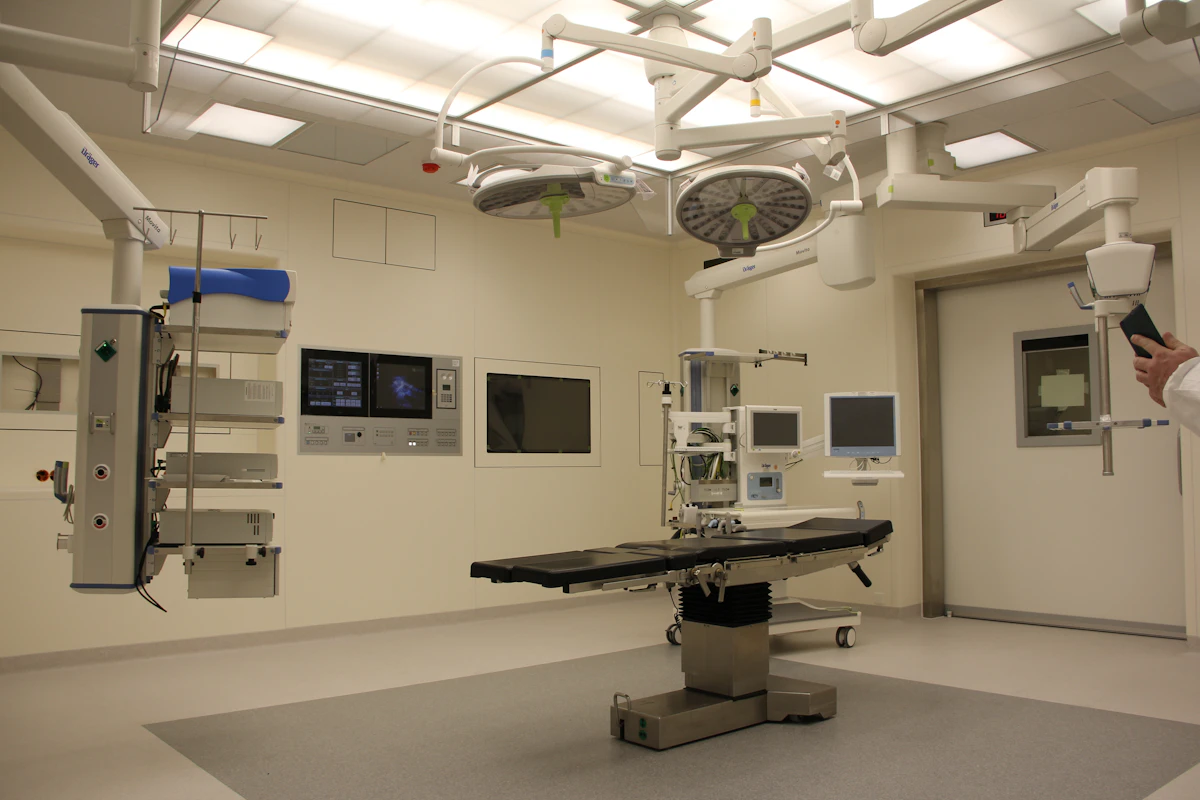
What Is Medical Technology Sourcing for Hospitals?
Medical technology sourcing is the systematic identification, evaluation, procurement, and integration of clinical assets within a healthcare enterprise. It spans high-acuity capital equipment, such as magnetic resonance imaging (MRI) units, down to connected point-of-care diagnostics and SaaS-driven surgical workflows.
Hospitals no longer purchase technology purely based on physician preference. Modern procurement committees balance clinical efficacy with financial exposure and technological longevity.
- Capital equipment: High-cost diagnostic and surgical hardware including CT scanners, robotic-assisted surgery systems, and linear accelerators.
- Biomedical consumables: Single-use surgical tools, specialized catheter kits, and patient-monitoring sensors requiring recurring procurement.
- Digital health infrastructure: Enterprise Picture Archiving and Communication Systems (PACS), AI-driven diagnostic software, and remote monitoring networks.
Why Is Strategic MedTech Sourcing Critical for Healthcare Systems?
Strategic sourcing prevents cost overruns, limits clinical downtime, and ensures regulatory defensibility. When hospital supply chains falter or acquire incompatible technologies, the direct result is cancelled surgical procedures, compromised patient outcomes, and eroded operating margins.
According to research published by the American Hospital Association, medical supply and technology expenses represent one of the fastest-growing cost drivers for acute care hospitals nationwide.
"Acquiring clinical hardware without cross-departmental vetting creates operational silos. A device purchased without IT, biomedical, and clinical alignment costs an average of 42% more over its operational lifecycle due to emergency change orders and delayed system integration."
Hospitals leveraging structured sourcing methodologies capture predictable advantages:
- Direct financial savings: Bulk agreements and global distributor competition reduce capital outlays by 12% to 28%.
- Standardized clinical training: Uniform device fleets across facilities shorten nursing onboarding timelines and minimize user-induced equipment errors.
- Guaranteed uptime metrics: Service Level Agreements (SLAs) negotiate guaranteed parts availability and guaranteed technician dispatch times within 2 to 4 hours.
Hospitals expanding service lines internationally often consult strategic healthcare partnerships worldwide to benchmark their technology selections against cross-border operational benchmarks.
How to Structure a Hospital MedTech Sourcing Process?
A resilient sourcing process follows a structured, cross-functional framework that eliminates departmental blind spots. Sourcing committees should incorporate materials managers, biomedical engineers, chief medical officers, and hospital IT leadership.
Clinical Needs Assessment ➔ Technical & Regulatory Audit ➔ Total Cost Analysis (TCO) ➔ RFP & Vendor Negotiation ➔ Pilot & Clinical Acceptance
- Conduct a clinical needs assessment: Identify genuine technological gaps versus vendor-driven upgrades by reviewing patient volume metrics and diagnostic wait times.
- Perform regulatory and cybersecurity verification: Confirm active clearance by checking databases like the FDA Premarket Approval (PMA) directory and evaluating SOC 2 Type II compliance for cloud-connected equipment.
- Calculate full lifecycle costs: Build a model accounting for acquisition, software licensing, training, preventive maintenance, and end-of-life disposal.
- Issue a competitive Request for Proposal (RFP): Benchmark tier-one global manufacturers against emerging, high-specification alternatives to leverage competitive bidding.
- Establish a clinical trial or pilot program: Test the hardware in an active clinical setting for 30 to 60 days to collect qualitative feedback from doctors and nurses before final fleet rollout.
Institutions navigating complex global supply chains frequently rely on an international medical service provider B2b to handle regional logistics, customs compliance, and multi-country delivery schedules.
Direct Sourcing vs. Group Purchasing Organizations: How Do They Compare?
Hospitals typically choose between acquiring equipment via Group Purchasing Organizations (GPOs) or contracting directly with Original Equipment Manufacturers (OEMs) and international distributors.
| Selection Metric | Group Purchasing Organization (GPO) | Direct OEM Sourcing | Hybrid Global Brokerage |
|---|---|---|---|
| Upfront Pricing | Moderate discount (standard tier) | Variable; requires high-volume leverage | Highly competitive for multi-unit lots |
| Contract Customization | Low; standardized terms | High; tailored to specific clinical workflows | High; bespoke cross-border SLAs |
| Procurement Speed | Fast for standard hospital SKUs | Slower due to legal negotiations | Moderate; requires regulatory verification |
| Direct Engineering Support | Indirect; relies on vendor tier | Direct access to factory engineers | Direct access with localized field support |
| Best Suited For | High-volume routine consumables | Flagship robotic & imaging suites | Specialized cross-border expansions & centers |
While GPOs excel at commoditized supplies, direct sourcing and targeted global partnerships provide greater customization for cutting-edge modalities. Healthcare networks managing clinical tourism wings frequently deploy b2b medical consultation services to source purpose-fit technologies that support complex international cases.
How Do You Assess Total Cost of Ownership (TCO)?
Total Cost of Ownership models evaluate the complete financial commitment of an asset from procurement to decommissioning. Evaluating capital purchase price alone frequently results in post-purchase budget deficits.
- Capital expenditure (CapEx): The base purchase invoice or lease structure, including initial delivery, physical rigging, and structural room preparation.
- Implementation and integration: Network configuration fees, interface development for EHR/PACS synchronization, and IT security penetration testing.
- Biomedical engineering maintenance: Scheduled preventive maintenance, vacuum tube or magnet replacements, calibration, and emergency repair call-outs.
- Operational consumables: Specialized proprietary proprietary reagents, single-use handpieces, disposable drape sets, and calibration fluids required for daily operations.
- Decommissioning costs: Safe hardware removal, biological de-contamination, hazardous waste compliance, and certified cryptographic data erasure.
A real-world hospital scenario illustrates this dynamic: A 250-bed community hospital acquired a discounted 1.5T MRI unit saving $150,000 upfront. However, proprietary helium maintenance contracts and non-negotiated replacement coil fees exceeded $380,000 in unbudgeted operational expenses over 48 months.
What Regulatory and Security Standards Apply to Medical Technology Procurement?
Regulatory compliance guarantees that hospital assets adhere to patient safety mandates and federal cybersecurity standards. Procuring unauthorized or vulnerable hardware introduces enterprise liability and operational disruption.
Device Quality and Safety Mandates
Equipment sourced domestically or internationally must comply with strict manufacturing benchmarks. Sourcing officers must verify:
- ISO 13485:2016 certification: Proves the manufacturer adheres to international comprehensive quality management systems for medical devices.
- FDA 510(k) or PMA approvals: Validates safety, efficacy, and equivalence profiles for clinical deployment in the United States.
- CE Mark under EU MDR 2017/745: Confirms adherence to stringent European clinical data, tracing, and post-market surveillance standards.
Cybersecurity and Clinical Network Integration
Connected medical equipment is an acute vulnerability in hospital cybersecurity infrastructure. The Department of Health and Human Services (HHS) consistently highlights networked clinical endpoints as prime vectors for ransomware attacks.
- MDS2 form review: The Manufacturer Disclosure Statement for Medical Device Security reveals vulnerabilities, encryption levels, and patch management protocols.
- Network segmentation viability: Systems must support isolated VLAN operation without breaking telemetry transmission to nurse stations or central servers.
- Role-based access control (RBAC): Software interfaces must feature granular access profiles and integrate with existing enterprise active directory services.
When Does Global Sourcing Make Sense for Modern Health Networks?
Global sourcing is advantageous when local supply monopolies inflate pricing, when domestic manufacturers face production backlogs, or when international innovations offer superior clinical utility.
Hospitals seeking state-of-the-art technologies can bypass regional supply bottlenecks by collaborating with vetted overseas suppliers. Furthermore, health systems that maintain global medical tourism b2b partners rely on internationally sourced diagnostic solutions to meet the expectations of discerning foreign patients.
- Niche clinical applications: Specialized radiation oncology or orthopedics instruments produced exclusively by precision engineering hubs in Germany, Switzerland, or Japan.
- Supply chain redundancy: Secondary sourcing channels for PPE, surgical consumables, and critical monitoring peripherals during domestic supply shocks.
- Cost optimization: Substantial cost savings on CE-marked, ISO-certified surgical tables, surgical lights, and diagnostic ultrasound devices without clinical compromise.
Conclusion
Optimizing medical technology sourcing for hospitals requires transitioning from reactive purchasing to disciplined lifecycle asset management. Hospital leadership must synthesize clinical requirements, cybersecurity controls, and comprehensive TCO modeling before executing contracts. Organizations that implement structured procurement workflows protect their operating margins while equipping clinical teams with the reliable tools necessary for patient care.
Frequently Asked Questions
What is medical technology sourcing for hospitals?
Medical technology sourcing is the strategic identification, regulatory vetting, financial evaluation, and procurement of clinical hardware, software, and consumables across an enterprise healthcare network.
How do hospital procurement teams evaluate new medical devices?
Evaluate the Total Cost of Ownership (TCO), verify FDA clearance or CE-MDR certification, assess cybersecurity via an MDS2 form, and ensure interoperability with existing EHR and PACS platforms.
What is the difference between direct sourcing and using a GPO?
A GPO aggregates purchasing volume across hundreds of hospitals to secure pre-negotiated tier discounts, whereas direct OEM sourcing offers customized SLAs, direct engineering support, and greater contractual flexibility for complex capital equipment.
How do cybersecurity standards impact hospital technology procurement?
Hospitals require vendors to provide a completed Manufacturer Disclosure Statement for Medical Device Security (MDS2), prove data encryption standards, and verify that devices support network segmentation.
Why is Total Cost of Ownership (TCO) critical when sourcing medtech?
Total Cost of Ownership models account for the capital purchase price, installation, integration, routine maintenance, proprietary consumables, staff training, and end-of-life disposal.
