
Medical technology sourcing for hospitals is the strategic procurement process of identifying, evaluating, and purchasing advanced biomedical devices, diagnostic platforms, and digital health software from global manufacturers. This systematic workflow balances clinical efficacy, total cost of ownership (TCO), and regulatory compliance to modernize patient care infrastructure. By leveraging data-driven evaluations and international supply networks, health systems secure high-value medical innovations while mitigating clinical and financial risks.
Key Takeaways
- Strategic procurement integration: Aligning clinical stakeholders with biomedical engineering reduces post-purchase technology adoption failure by up to 30%.
- Regulatory risk mitigation: Validating FDA 510(k), CE mark, and ISO 13485 certifications upfront prevents cross-border supply chain impoundment.
- Total cost evaluation: Operating expenses, recurring maintenance, and proprietary consumables represent up to 60% of lifetime device expenditures.
- Interoperability enforcement: Prioritizing HL7 and FHIR communication standards eliminates costly electronic health record (EHR) integration delays.
- Supply chain resilience: Multi-region vendor diversification protects health systems against component shortages and logistical bottlenecks.
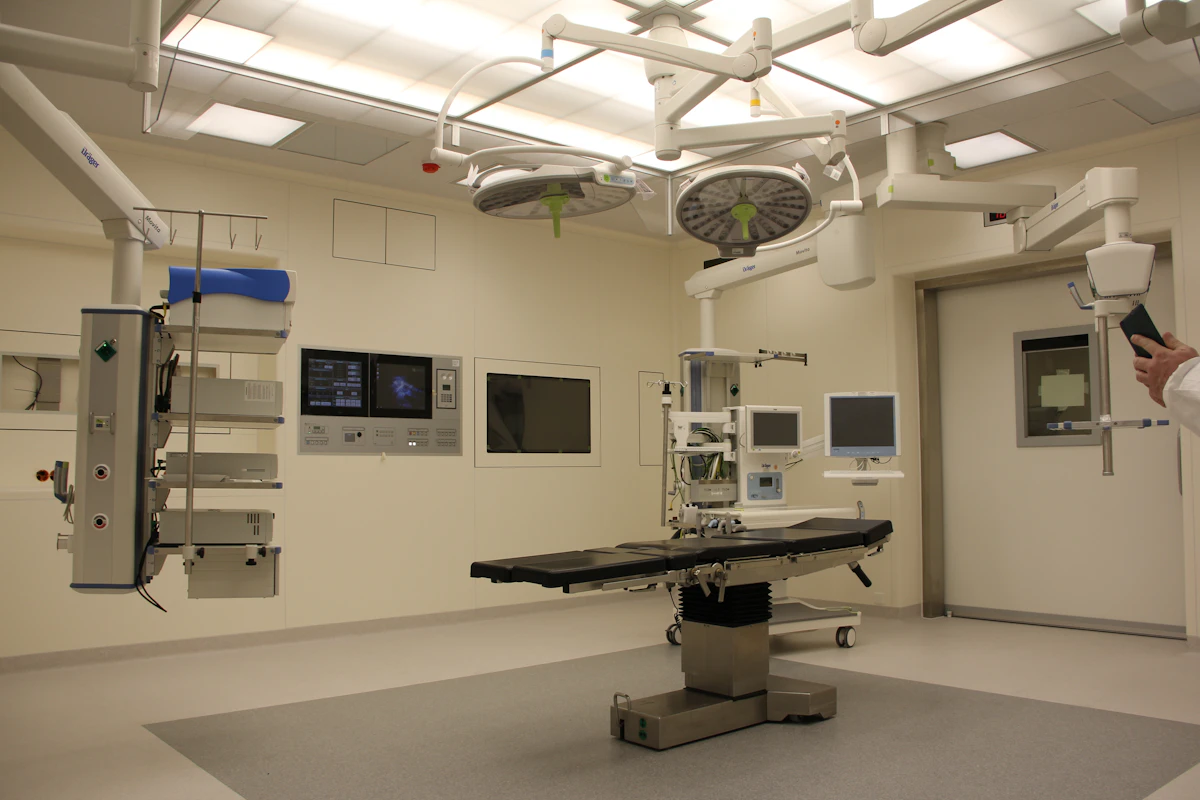
What Is Medical Technology Sourcing for Hospitals?
Medical technology sourcing for hospitals is the cross-functional method of acquiring capital medical equipment, software, and disposable clinical assets from vetted manufacturers. Unlike standard purchasing, it focuses heavily on lifecycle performance, integration with existing digital infrastructure, and clinical safety profiles.
Hospital sourcing teams assess hardware such as MRI scanners, point-of-care ultrasound devices, and robotic surgery suites alongside enterprise AI solutions. Integrating custom medical solutions for healthcare providers enables hospital networks to negotiate tailored commercial agreements rather than relying on off-the-shelf vendor contracts.
A standardized procurement workflow covers four primary domains:
- Biomedical validation: Assessing hardware durability, mean time between failures (MTBF), and clinical efficacy.
- Cybersecurity audits: Verifying encryption standards and vulnerabilities under federal mandates like the U.S. FDA cybersecurity guidelines.
- Financial modeling: Calculating depreciation, cost-per-procedure metrics, and warranty terms.
- Service availability: Confirming regional field technician coverage and spare-parts supply guarantees.
Why Must Hospitals Modernize Medical Technology Sourcing?
Traditional healthcare purchasing relies on siloed group purchasing organizations (GPOs) and legacy relationships, which frequently lead to inflated pricing and obsolete equipment deliveries. Rapid innovations in digital diagnostic tools require agile sourcing models that evaluate direct manufacturer relationships worldwide.
Modern sourcing methodologies prevent vendor lock-in by vetting open-architecture platforms. Hospitals that source equipment internationally can explore opportunities through an international medical service provider B2B network to bypass regional market markups.
Key market pressures driving sourcing modernization include:
- Rapid technology obsolescence: Imaging modalities and diagnostic sensors experience shorter software lifecycle turnover.
- Budgetary constraints: Rising operational expenditures require procurement teams to extract measurable return on investment (ROI).
- Supply volatility: Geopolitical shifts and component shortages demand diversified global supplier networks.
How to Establish a Global Sourcing Framework for Healthcare Systems?
Deploying a structured framework ensures procurement teams source reliable medical technology without compromising patient safety or capital efficiency. Hospitals must execute this process in clearly defined chronological stages.
- Conduct a clinical needs assessment: Audit operational gaps across departments to define mandatory specifications versus non-essential features.
- Engage international supply channels: Source qualified manufacturers globally or leverage strategic healthcare partnerships worldwide to broaden vendor options.
- Audit manufacturer compliance: Request documented compliance with ISO 13485 standards for medical device quality management systems.
- Draft request for proposals (RFPs): Define exact system interoperability, delivery milestones, training mandates, and penalty clauses.
- Execute clinical pilot testing: Place demonstration units in target departments to capture physician and nurse feedback.
- Negotiate service level agreements (SLAs): Establish strict uptime guarantees (typically 98% or higher) and defined technician response times.
"Procuring medical hardware without an upfront lifecycle and parts-availability contract regularly inflates the total cost of ownership by more than 40% over seven years."
What Sourcing Model Best Suits Hospital Infrastructure?
Hospitals can choose among several procurement approaches depending on balance sheet strength, internal technical talent, and risk appetite. Evaluating direct versus decentralized sourcing models ensures alignment with executive fiscal targets.
| Procurement Model | Capital Expenditure (CapEx) | Supply Chain Risk | Customization Level | Administrative Overhead |
|---|---|---|---|---|
| Direct Manufacturer Sourcing | High | Low to Medium | High | High |
| Traditional GPO Contracts | Medium to High | Low | Low | Low |
| Strategic B2B Partners | Medium | Low | High | Medium |
| Equipment Leasing Agreements | Low (Converted to OpEx) | Medium | Medium | Medium |
Direct sourcing delivers superior pricing and customization but requires internal expertise to manage importation and testing. Conversely, utilizing specialized intermediaries mitigates regulatory and international freight complexities for specialized hospital divisions.
How Do Regulatory and Interoperability Standards Impact Sourcing?
Regulatory non-compliance halts equipment delivery and exposes healthcare facilities to severe institutional liability. Every sourced medical device must carry the appropriate clearance from the regional governing authority before deployment.
Essential Regulatory Clearances
- United States: Premarket Approval (PMA) or 510(k) clearance issued by the FDA.
- European Union: Conformité Européenne (CE) marking under the Medical Device Regulation (MDR 2017/745).
- Global Quality Standards: Medical Device Single Audit Program (MDSAP) verification.
Software and Data Integration Requirements
Modern hospital assets must communicate with Electronic Medical Record (EMR) software to support clinical efficiency. Sourcing protocols must require adherence to Fast Healthcare Interoperability Resources (FHIR) and Digital Imaging and Communications in Medicine (DICOM) standards. Devices lacking native interoperability create manual data-entry bottlenecks and increase diagnostic error rates.
What Are the Hidden Costs of Medical Device Sourcing?
The initial purchase price of hospital technology accounts for only 40% to 50% of its cumulative operational footprint. Neglecting post-procurement expenses rapidly drains hospital capital reserves.
Total Lifecycle Cost = Acquisition Price + (Annual Maintenance x Years) + Consumables + Integration Costs + Decommissioning
Procurement committees must budget for these secondary cost drivers:
- Proprietary consumables: High-margin single-use accessories, such as specialty catheters or patient sensors, required to operate the core platform.
- De-installation and disposal: Hazardous waste handling and safe radiological disposal requirements under municipal guidelines.
- Staff education and training: Continuing medical education (CME) and clinical specialist onboarding costs for complex instrumentation.
- Software subscription licenses: Recurring SaaS fees for firmware maintenance, AI diagnostic modules, and cloud storage.
Case Study: Optimizing Imaging Equipment Sourcing
A multi-facility hospital network required three 3.0T MRI units across regional campuses. Traditional domestic suppliers quoted $6.2 million with inflexible multi-year maintenance terms that escalated annual service costs by 8% per year.
By transitioning to an open-vendor evaluation process supported by global distribution channels, the hospital:
- Procured equivalent European-manufactured systems featuring open DICOM architecture.
- Reduced initial capital outlay by 18% through direct component negotiation.
- Negotiated a standardized 7-year service SLA capped at a 2.5% annual escalation ceiling.
The strategic sourcing initiative saved the hospital network $1.4 million in total lifecycle costs while accelerating departmental delivery schedules by six weeks.
How Can Hospitals Build Resilient Global Medical Supply Chains?
Global shocks, shipping delays, and component shortages can cripple clinical operations if supply pipelines depend on single-source vendors. Supply chain resilience requires active diversification across geographical regions and technology tiers.
Hospitals achieve resilience by maintaining tiered relationships:
- Primary original equipment manufacturers (OEMs): Anchor large capital projects with proven enterprise hardware providers.
- Secondary regional suppliers: Maintain approved auxiliary providers for urgent modular expansions and replacement parts.
- Advisory channels: Consult with B2B medical consultation services to continuously monitor global technological breakthroughs and regulatory adjustments.
Sourcing teams should run semi-annual supply vulnerability audits to stress-test critical clinical lines against global disruptions.
Conclusion
Systematic medical technology sourcing for hospitals transforms procurement from a reactive administrative chore into a strategic driver of clinical excellence. By prioritizing interoperability, regulatory rigor, and lifecycle financial metrics, healthcare organizations secure cutting-edge diagnostic and therapeutic platforms safely. Take control of your procurement strategy today by auditing existing technology contracts and identifying high-impact areas for global sourcing diversification.
Frequently Asked Questions
What is medical technology sourcing for hospitals?
Medical technology sourcing for hospitals is the cross-functional strategic process of evaluating, procuring, and deploying medical devices, diagnostic tools, and clinical software from global suppliers to maximize clinical efficacy and cost efficiency.
How do hospital procurement teams calculate the total cost of ownership?
Hospitals evaluate total cost of ownership by calculating initial acquisition price, recurring maintenance contracts, mandatory consumables, staff training expenses, software licensing, and decommissioning fees.
What regulatory certifications are mandatory when sourcing medical equipment?
Essential certifications include FDA 510(k) or PMA clearance for the US, CE mark compliance under MDR for Europe, and ISO 13485 certification for the manufacturer's quality management system.
Why is software interoperability critical in medical technology procurement?
Interoperability ensures that newly procured medical hardware seamlessly exchanges patient and telemetry data with hospital EHR and PACS systems via standards like HL7 and FHIR without manual data entry.
What is the main drawback of direct manufacturer sourcing for hospitals?
Direct manufacturer sourcing delivers greater technical customization and lower unit prices, but requires the hospital to manage regulatory clearance, international shipping logistics, and individual maintenance agreements.
