
Advanced healthcare technology solutions encompass specialized digital systems, medical internet-of-things (IoMT) devices, artificial intelligence algorithms, and integrated data infrastructures designed to modernize clinical delivery. These enterprise-grade technologies improve diagnostic accuracy, automate complex hospital workflows, and secure interoperability across disparate global networks. For international providers, implementing modern medical technology reduces operational overhead while elevating the standard of patient-centric care.
Key Takeaways
- Advanced healthcare technology solutions streamline clinical operations by integrating artificial intelligence, tele-health architecture, and automated procurement systems.
- Enterprise-wide interoperability remains reliant on standardized protocols like HL7 and Fast Healthcare Interoperability Resources (FHIR).
- Predictive diagnostic software reduces diagnostic latency by analyzing medical imaging datasets against pre-trained multi-modal baseline networks.
- IoMT edge devices require hardware-level cryptographic key storage and automated patch validation to mitigate cybersecurity breaches.
- Cross-border supply resilience relies on real-time hardware tracking platforms and international compliance synchronization.
What Are Advanced Healthcare Technology Solutions?
Advanced healthcare technology solutions represent hardware, software, and logistical infrastructure built to handle high-volume clinical tasks without human-dependent latency. Unlike standard healthcare software, these tools synthesize massive clinical datasets to automate real-time decisions.
These integrated systems target three foundational operational pillars:
- Predictive clinical decision-support: algorithmic risk modeling that alerts physicians to early deterioration indicators such as acute kidney injury or sepsis.
- Interoperable digital core: modular Electronic Health Record (EHR) configurations linking pharmacy, radiology, and laboratory databases simultaneously.
- Automated equipment logistics: data-driven infrastructure that ties clinical asset demand directly to wholesale medical equipment distributors USA for zero-delay hardware deployment.
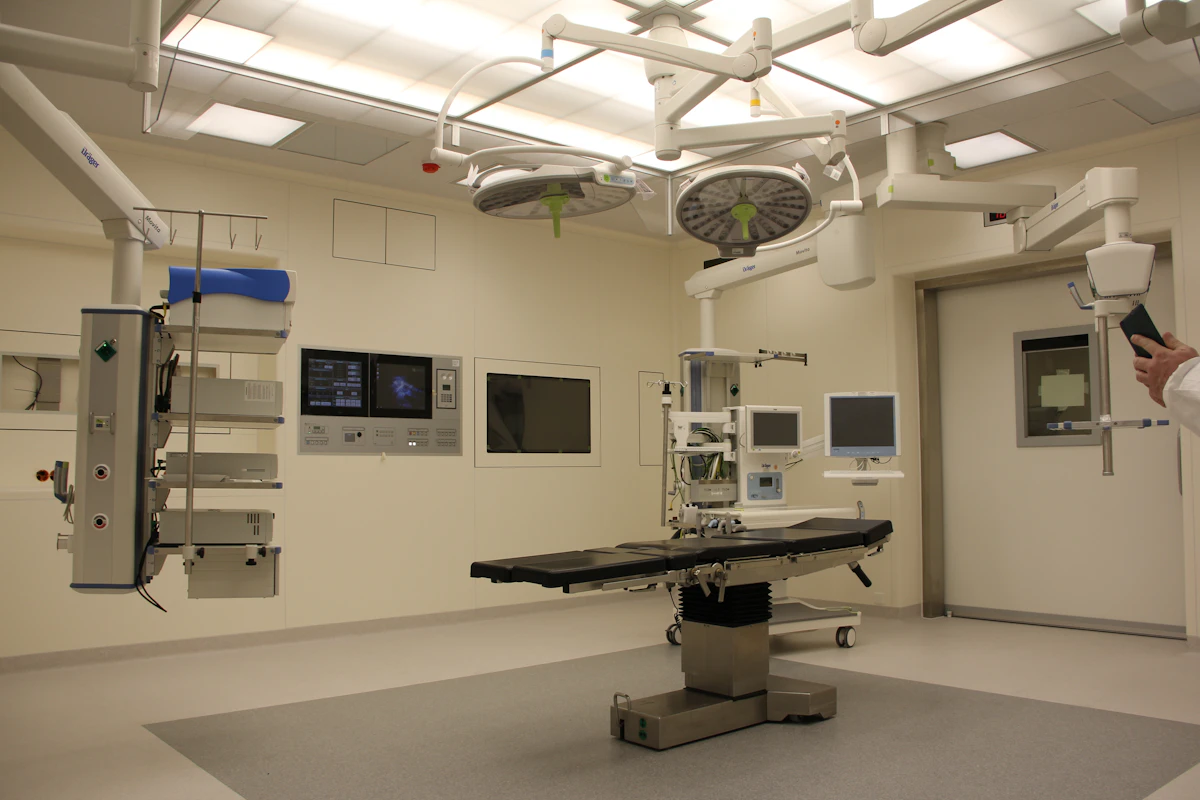
How Do Modern Health Technologies Compare to Legacy Systems?
Traditional hospital hardware and standalone legacy record systems function within disconnected silos. Transitioning to integrated clinical architectures introduces native cloud communication, automated compliance reporting, and predictive resource allocation.
The operational differences highlight why hospitals retire manual architectures:
| Operational Metric | Legacy Infrastructure | Advanced Healthcare Technology Solutions |
|---|---|---|
| Data Architecture | On-premise, proprietary, siloed silos | Cloud-hybrid, FHIR-standardized, real-time |
| Asset Monitoring | Manual logging, periodic manual audits | Automated RFID & IoMT sensors with active telemetry |
| Diagnostic Workflow | Physician-dependent image segmentation | AI-assisted triage with deep-learning boundary detection |
| System Security | Perimeter-based firewalls, manual patching | Zero Trust Architecture (ZTA), hardware encryption |
| Procurement Cycle | Reactive replacement upon failure | Predictive tracking via a medical device distribution platform |
"Deploying artificial intelligence algorithms into clinical pipelines without first upgrading the underlying HL7/FHIR communication layer reliably leads to high error rates and clinician alert fatigue."
Which Core Innovations Drive Clinical Transformation?
Modern healthcare ecosystems depend on tightly coupled hardware and software environments. Rather than evaluating isolated tools, procurement heads prioritize systems that communicate natively across institutional borders.
1. Artificial Intelligence and Computer Vision
Clinical diagnostic platforms use convolutional neural networks (CNNs) to evaluate radiographic, CT, and MRI scans. According to research published by the National Institutes of Health (NIH), deep-learning platforms match or exceed board-certified specialists in identifying early-stage diabetic retinopathy and micro-nodular lung pathologies.
- Computer-aided detection (CADe): flags suspicious tissue variations before specialist review.
- Natural language extraction (NLE): parses unstructured clinical notes to auto-populate diagnostic codes.
- Synthetic cohort modeling: generates randomized clinical data to evaluate protocol efficacy without compromising patient privacy.
2. Connected IoMT Ecosystems
Medical IoT devices continuously broadcast critical patient metrics to centralized telemetry boards. Wearable biosensors and smart infusion pumps utilize low-power Bluetooth and Wi-Fi 6 to stream vitals directly into the patient chart.
Securing these tools requires continuous integration alongside specialized healthcare technology integration services to prevent unauthorized network penetration.
How to Overcome Global Integration Challenges?
Hospitals scaling technology across multiple geographical regions encounter complex regulatory barriers and incompatible data frameworks. Global institutions must address local privacy laws, varying infrastructure capacity, and legacy equipment divergence.
To execute integrations smoothly, organizations follow a standardized implementation sequence:
- Conduct an architectural readiness audit: catalog all existing hardware endpoints, serial connections, and bandwidth limitations.
- Standardize data models on open APIs: normalize internal records to conform with regional mandates such as HIPAA in the United States or GDPR across Europe.
- Establish secure supply pipelines: establish predictable procurement channels for specialized hardware via specialized medical equipment procurement networks.
- Deploy a phased pilot protocol: deploy automated software within non-critical ambulatory wards before cutover in emergency and intensive care units.
- Run continuous validation testing: simulate peak network loads and test automated failover sequences weekly.
Why Is Resilient Supply Chain Infrastructure Critical for Tech Deployment?
Software platforms cannot function without reliable hardware endpoints, telemetry nodes, and computational servers. Equipment shortages rapidly bottleneck technological expansion, delaying diagnostic modernization.
Modern health networks mitigate this vulnerability by integrating their inventory engines with a robust global healthcare supply chain solutions guide. Automated asset management tools monitor the duty cycles of MRI coils, digital radiography plates, and surgical sensors, triggering reorders before components reach failure thresholds.
How Do Global Regulations Impact Medical Technology Architecture?
Global clinical networks must comply with evolving regional medical device software mandates. The U.S. Food and Drug Administration (FDA) regulates Software as a Medical Device (SaMD) through strict premarket notification programs (510(k)) and cybersecurity lifecycle standards.
International deployments require dual validation:
- Cybersecurity compliance: ensuring all endpoints feature an auditable Software Bill of Materials (SBOM) to protect against firmware manipulation.
- Clinical efficacy validation: proving algorithms deliver repeatable findings across diverse demographic populations.
- Data residency compliance: configuring hybrid clouds so that patient identifiers do not cross national legal boundaries without explicit tokenization.
Conclusion
Deploying advanced healthcare technology solutions transforms fragmented healthcare facilities into proactive, data-driven ecosystems. Healthcare enterprises that modernize their digital architecture ensure regulatory compliance, protect critical data, and optimize clinical outcomes worldwide. Evaluate your operational infrastructure today to transition away from legacy friction and embrace scalable clinical automation.
Frequently Asked Questions
What are advanced healthcare technology solutions?
Advanced healthcare technology solutions are integrated platforms—including IoMT hardware, diagnostic AI, interoperable electronic health records, and automated logistical systems—designed to streamline hospital operations and enhance clinical decision-making.
How do healthcare organizations ensure international software compliance?
Hospitals ensure compliance by deploying systems with open APIs matching HL7 and FHIR specifications, enforcing Zero Trust cybersecurity architectures, and generating verifiable Software Bills of Materials (SBOM) for all clinical applications.
How does modern medical technology differ from legacy healthcare systems?
Legacy systems rely on isolated, on-premise architectures that require manual data synchronization, whereas modern solutions leverage real-time cloud data pipelines, predictive AI triage, and active device telemetry.
What role does artificial intelligence play in advanced clinical technology?
Artificial intelligence functions as an integrated clinical decision-support layer, analyzing imaging data and patient telemetry in real time to alert clinicians to early markers of clinical deterioration.
How can medical providers scale technological systems across cross-border facilities?
Organizations ensure seamless scaling by utilizing standardized international APIs, conducting thorough pre-deployment infrastructure audits, and partnering with verified global procurement and distribution platforms.
